Inca Trail Permits: How Booking Works Through an Operator
We earn a commission when you book through our links on Viator, at no extra cost to you. This is how we keep the site free. Learn more →
People talk about an Inca Trail permit as if it were a ticket you could pick up at a counter, and it isn't. When you book the trek, you get the permit too, and it comes from the operator you choose. Once you see it that way, the rest of the planning gets simpler: you are choosing a company and a date, and the permit comes with them or not at all.
What to Know About Inca Trail permits
You cannot buy an Inca Trail permit on your own. Every trekker has to walk with a guide, so a registered tour operator buys the permit in your name and against your passport. That means choosing a permit and choosing an operator are one decision, and once a date has gone, it stays gone.
The rule behind all of this is simple. According to the Wikipedia entry on the Inca Trail to Machu Picchu, which summarises how Peru's Ministry of Culture runs the route: Every Inca Trail trekker must be accompanied by a guide, so permits are bought through a registered tour operator. Independent hiking on this trail is not an option. Comparing permits means comparing operators.
The second rule explains why dates disappear. Inca Trail permits are tied to an individual passport and cannot be transferred. Permits are limited in number, and each one carries a single traveller's identity, so nobody can resell a permit or pass one on. If a date fills, waiting for someone to sell their spot won't work. Your options are a different date or a different walk.
Because of the passport link, give the operator the passport you will carry on the trek. If you expect to renew your passport between booking and departure, ask the operator in writing how they handle the change before you pay a deposit. Don't count on a fix you haven't seen confirmed.
The calendar has one fixed gap. The Inca Trail closes every February for maintenance, as the Wikipedia summary of the trail notes. If February is your only travel window, this permit system is the wrong place to start. Look at the Salkantay trek as a separate route with its own logistics.
Inca Trail 4-Day Trek to Machu Picchu, Return by Vistadome Train
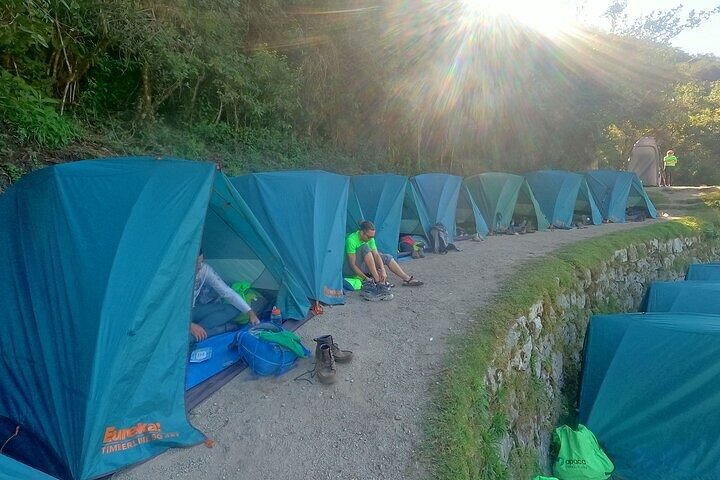
This listing names its return: you come back on the Vistadome train, so you know your rail class before you book. It also describes a sweep guide who stays at the back of the group, gives its food safety rules, and says written lecture notes are emailed to you afterwards. That last detail is unusual, and it will appeal to people who want to remember what they learned at each site.
The listing itself asks you to confirm the permit, Machu Picchu entry, accommodation, porters and group size before paying, and I would do exactly that. Get the permit confirmation in your name before anything else. Skip this one if you would rather choose your own return train, or if what you most want is a clear description of porter and camp crew. The next listing gives more detail on both.
Inca Trail 4-Day Trek to Machu Picchu, Return by Vistadome Train
From $835 · Price checked: Oct 2026
Best for: Trekkers who want the 4-day Inca Trail with a Vistadome train return and a guide always at the back of the group.
Not for: Skip it if you need a day-by-day itinerary, camp details or inclusions, as the description covers only service guarantees.
A 4-day Inca Trail trek to Machu Picchu returning by Vistadome train, with a sweep guide, stated food safety rules and written lecture notes emailed afterward. Confirm permits, Machu Picchu entry, accommodation, porters and group size before paying.
Check availabilityExternal booking on Viator · pricing and cancellations handled by Viator
Common Planning Mistakes to Avoid
The mistakes that cost the most here happen before anyone starts walking. People assume a tour includes something it doesn't, plan around February, or treat a shorter trail as the same walk. You can catch every one of these by reading the listing line by line and putting your questions to the operator in writing.
Start with the entry ticket. A Machu Picchu tour does not automatically include entry to the citadel. Both classic-trek listings on this page ask you to confirm Machu Picchu entry, which tells you to check it rather than assume it. Find out which circuit the entry covers as well. A circuit decides which viewpoints you reach, and buying one without checking that is a quiet way to miss the view you came for.
Next, the shorter route. A two-day trail is not a lighter version of the four-day one. It is a different walk with a different finish. The short Inca Trail page covers it as its own trip. Read it as a separate choice, not a fallback that gives you the same experience.
Then think about arrival. Cusco is a high city, and I treat acclimatisation as part of the schedule, not something to fit in afterwards. Do the high day hikes after a few days in Cusco, not on the day you land. The same goes for Rainbow Mountain: putting it the morning after your flight is a planning error, not a test of fitness. For any question about how altitude affects you personally, ask a doctor before you travel.
Last comes the bag. The citadel has rules on daypack size, and an oversized pack can turn into a problem at the gate. Check the current bag rules with your operator before you pack. Skip the classic trail altogether if your itinerary has you trekking straight off the plane. The permit system won't wait for your body to adjust, and a fixed permit date is hard to move.
Inca Trail 4-Day 3-Night Trek to Machu Picchu with Expert Guides
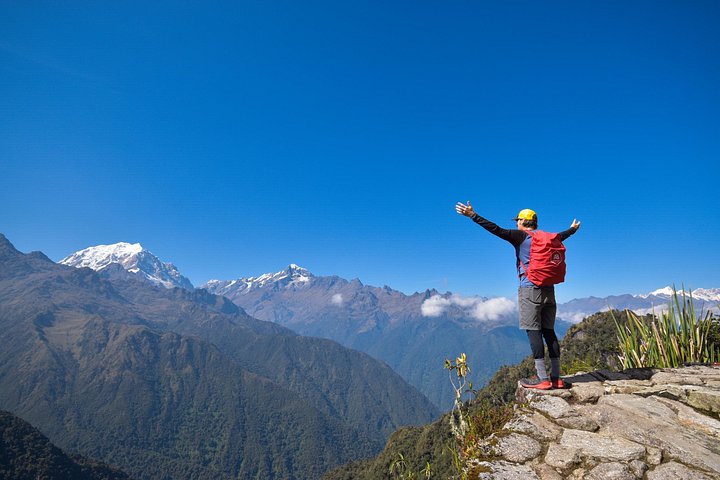
This is a camping trek on the classic route that finishes through the Sun Gate. The listing names its crew and kit: guides, porters, a chef, portable toilets and satellite phones. Its stated fit is hotel-to-hotel service, which suits travellers who want transfers handled from start to finish.
The listing asks you to confirm permits, Machu Picchu entry, the return train and porter weight limits. Take the return train seriously. Unlike the Vistadome listing above, this one leaves the train detail for you to confirm, so ask which service and class it uses. Ask for the porter weight limit in writing too, because it decides what you can hand over and what stays on your own back. Book the Vistadome listing instead when a named train class matters more to you than a detailed crew list.
Inca Trail 4-Day 3-Night Trek to Machu Picchu with Expert Guides
From $998 · Price checked: Oct 2026
Best for: Trekkers wanting a 4-day Inca Trail with porters, a chef and hotel-to-hotel service.
Not for: Skip it if you want to avoid camping, as meals are served at camping sites along the 26-mile route.
A 4-day, 3-night camping trek on the 26-mile Inca Trail via the Sun Gate, with guides, porters, a chef, portable toilets and satellite phones. Confirm permits, Machu Picchu entry, the return train and porter weight limits.
Check availabilityExternal booking on Viator · pricing and cancellations handled by Viator
Where Each Tour Format Fits
The classic permit trek suits travellers who can fix a date well ahead, are happy to walk with a guide and an operator, and want the full route ending at the Sun Gate. Travellers with loose dates or a February window should look at the shorter trail or the Salkantay route.
Start with the scale of the walk. Per Wikipedia's Inca Trail entry, the classic Inca Trail is about 42 kilometres long. That distance is the main reason to choose the classic trek, and also the main reason not to. If you want the whole approach on foot, the two listings above are the format to compare. If what you mainly want is the citadel, a multi-day permit is more commitment than you need.
Between the two classic listings, my editorial view is simple. The Vistadome listing is clearer about the return and the after-trek notes. The Expert Guides listing is clearer about the crew, camp kit and safety equipment. Neither listing guarantees a permit until the operator confirms one in your name, and I would not treat either as booked until that confirmation arrives.
The short Inca Trail fits travellers with less time who accept a different finish. The Salkantay trek fits people who want a multi-day walk but whose dates or month rule out the classic trail. For a wider look at the route, the Inca Trail overview is the place to start. Don't choose the classic format if a non-transferable permit makes you uneasy: changing passport, a companion who might drop out, or flights not yet booked all make it a poor fit.
What to Check Before Booking
Before you pay, get four things confirmed in writing: the permit in your name and passport, Machu Picchu entry with its circuit and entry time, which trains and buses are included, and cancellation terms that cover rail and weather disruption. If an operator won't put these on paper, keep looking.
- Ask the operator to confirm that your permit is issued in your name against the passport you will carry on the trek.
- Find out whether Machu Picchu entry is included, which circuit it covers, and which entry time the tour has booked.
- Check whether the train, the bus and the entry ticket are included or left to you, and get the train class named.
- Ask for the porter weight limit and the daypack rules before you start packing.
- Check your dates against the February closure before you look at anything else.
A trek is a permit, a guide, a train and a timed entry chained together. If one link moves, the whole trip moves with it. The rail operator sets train timetables and the Ministry of Culture sets access rules, and both can change, so check each link close to departure as well as at booking. Look elsewhere if a listing is vague about what is included and the operator won't clarify before taking payment.
Explore More
Related comparisons and guides:
Frequently Asked Questions
Can I buy an Inca Trail permit myself?
No. The permit comes as part of a guided booking, so your real decision is which registered operator to trust with your name and passport details.
What happens if a friend on my permit booking cannot travel?
Their place cannot go to someone else, because each permit carries one traveller's passport. Read the operator's refund terms for that case before the group pays.
Can I walk the Inca Trail in February?
No, the trail is shut that month for maintenance. A February trip needs a different route, such as Salkantay, planned on its own terms.
Does an Inca Trail booking include Machu Picchu entry?
Only if the listing says so and the operator confirms it. Both classic-trek listings on this page tell you to check entry before paying.
Is the short Inca Trail a backup when classic dates are gone?
Treat it as a separate trip with its own availability and its own finish, not as a substitute that gives you the same trek.
Edited from Cusco, Peru. Check the Ministry of Culture and the rail operator for current tickets and timetables before travelling.

Rosa edits Machu Picchu Planner's route and tour comparisons using published tour details and official ticket and rail sources. About Rosa.